DESIGN
Design by integrating energy and structural performance.
Assess the heat-exchange potential of a new thermoactive structure and evaluate its energy and structural performance from the earliest design stages.
Piles, retaining walls, foundation slabs and tunnels can incorporate heat-exchange systems to harness energy from the ground. Assessing their potential requires an understanding of both their energy performance and structural behaviour.
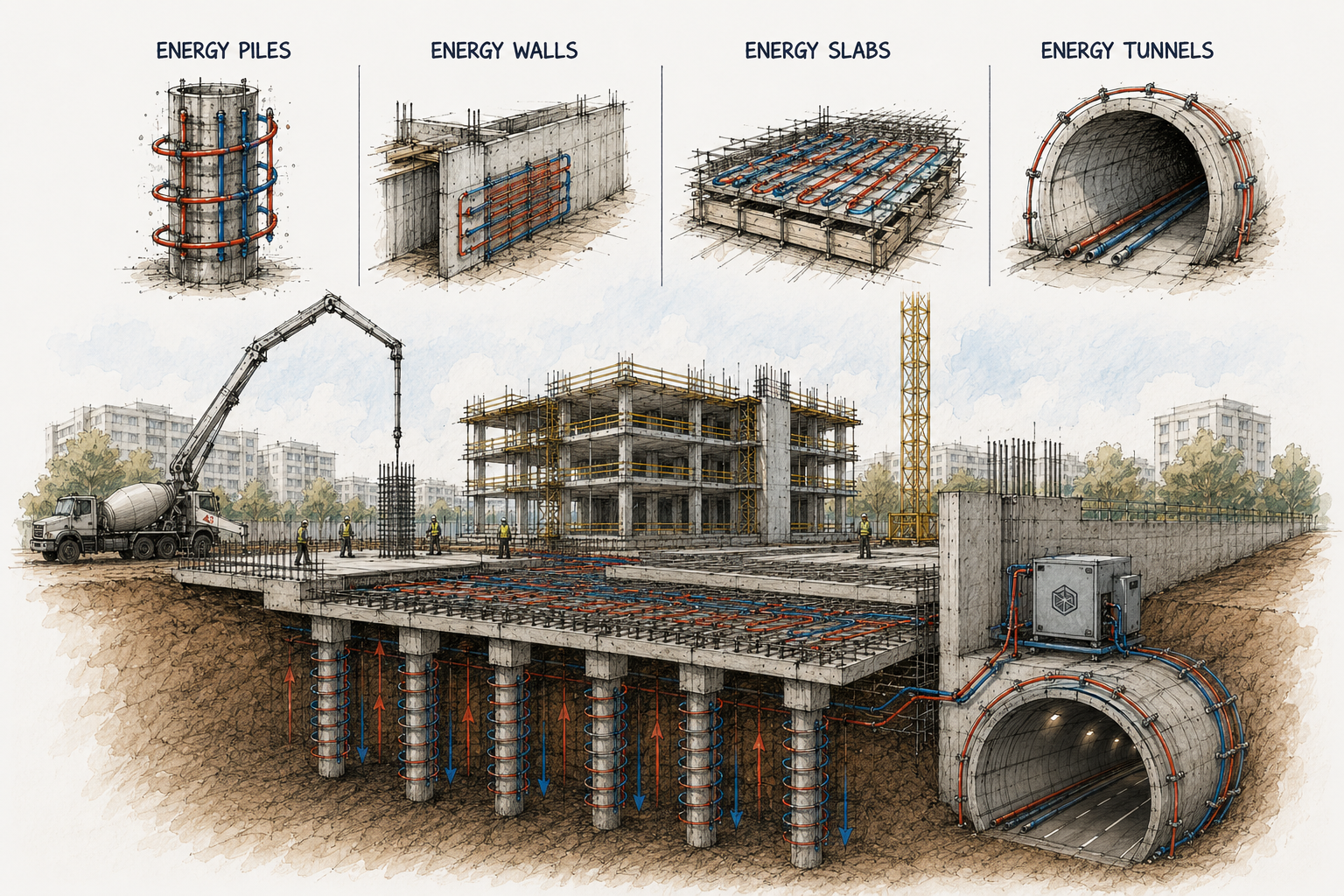
Design by integrating energy and structural performance.
Assess the heat-exchange potential of a new thermoactive structure and evaluate its energy and structural performance from the earliest design stages.
Understand how the installation performs.
Analyse the operation of an existing thermoactive structure, compare its response with the expected conditions and identify potential deviations and opportunities for improvement.
The thermoactive piles, also known asenergy piles, allow deep foundations to serve as exchangers ofgeothermal energy with the ground. Hydraulic circuits embedded in the concrete can contribute to building heating and cooling through ground-source heat pumps.
Their main advantage is using structural elements already included in the project, reducing the need for separate ground heat exchangers. The design of thermoactive pilesmust consider the thermal properties of the ground, foundation geometry and the building's energy demand.
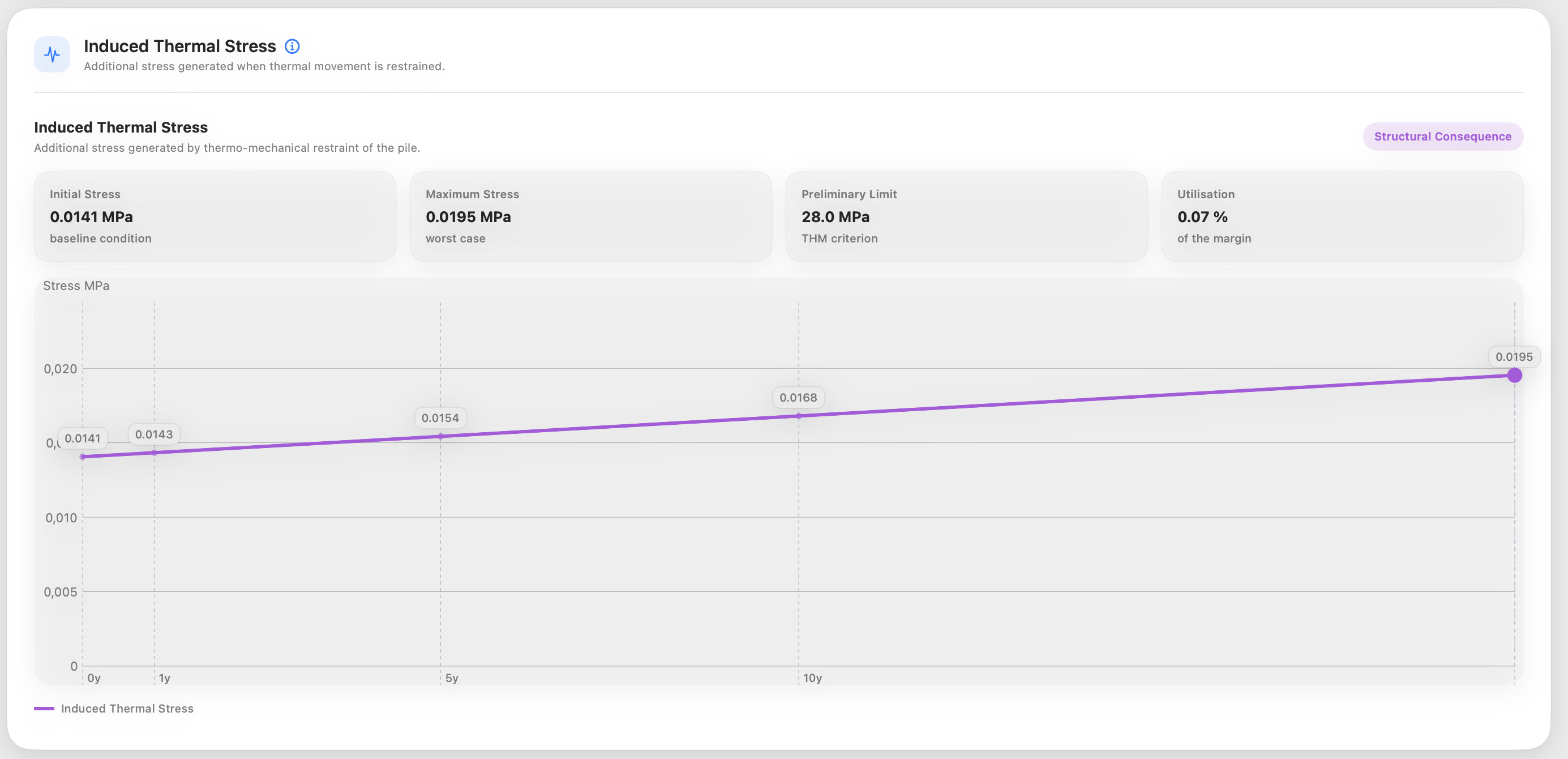
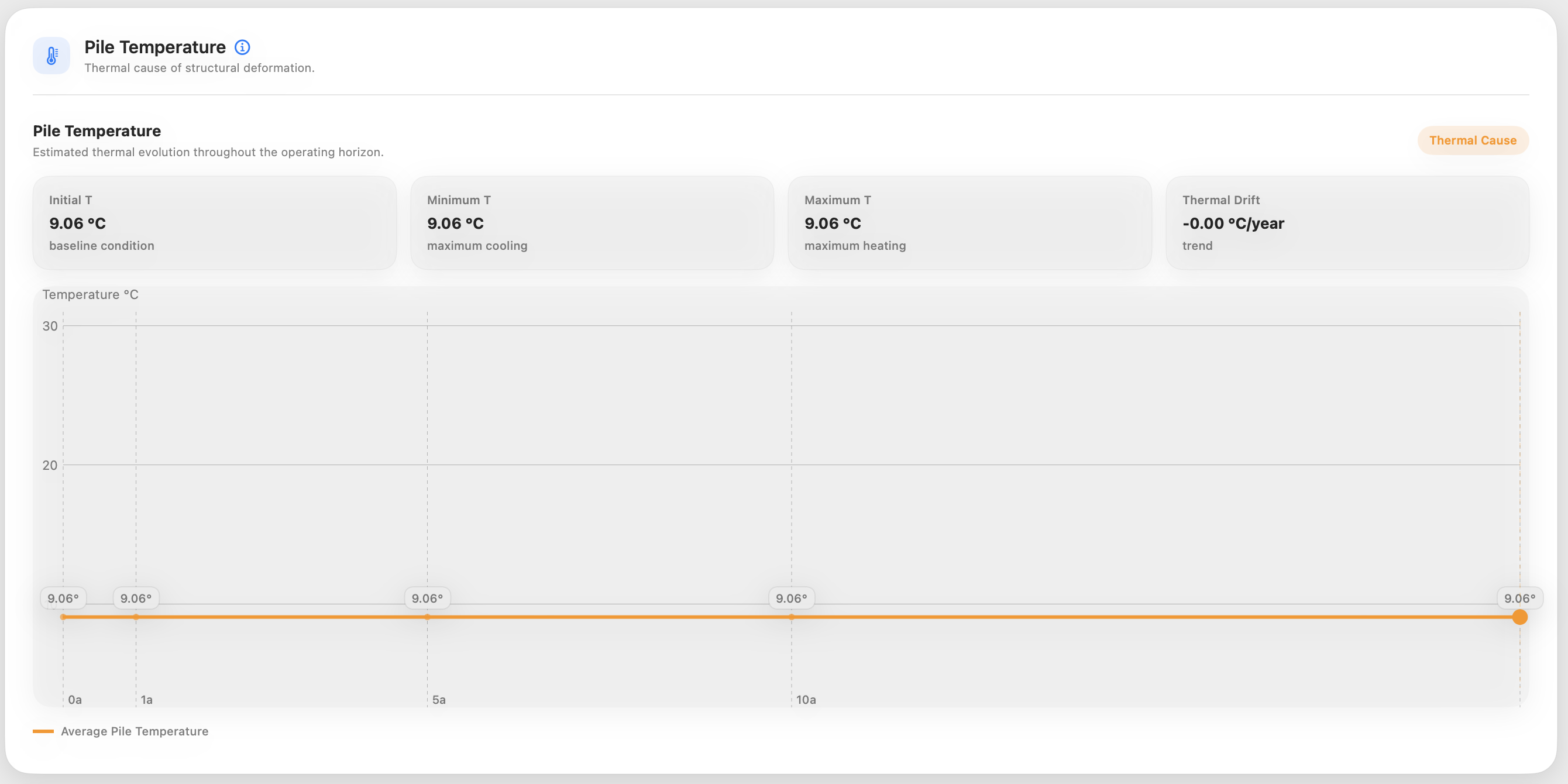
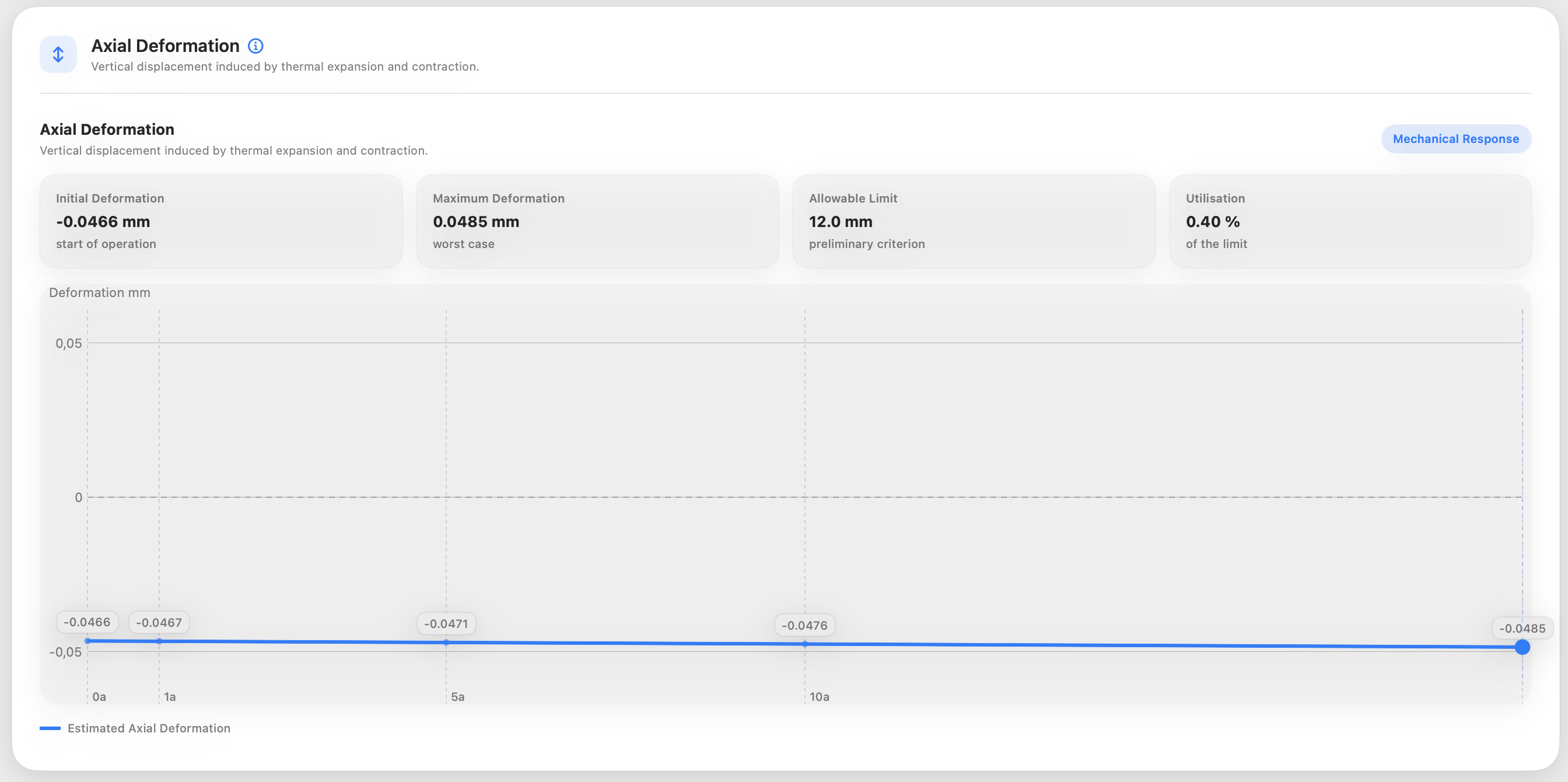
Heat exchange can induce additional stresses in the foundation. Therefore, thermo-mechanical analysis of energy pileshelps assess the compatibility between their structural function and geothermal use, while considering the evolution of ground temperatures and potential interactions between piles.
GeoView integrates energy analysis and thermo-mechanical assessment to support engineering decisions, relating geothermal potential to the response of both the ground and the structure.
Thermoactive walls, particularly diaphragm walls, make it possible to integrate geothermal heat-exchange circuits into structures that already serve an earth-retaining function. Their contact with the ground provides a heat-exchange surface that can be used for heating and cooling buildings and infrastructure.
Design must consider the thermal properties of the subsurface, the presence of groundwater and the system's operating conditions. At the same time, temperature changes can affect the wall's response and its interaction with the surrounding ground.
For this reason, geothermal energy use must be assessed alongside the stability and structural behaviour of the retaining structure.
Thermoactive foundation slabs incorporate heat-exchange circuits into the foundation, making use of its contact surface with the ground. This approach integratesshallow geothermal energy into the building itself and enables assessment of its contribution to heating and cooling requirements.
Their performance depends on slab geometry, the thermal properties of the ground and the layout of the circuits. It is also necessary to assess how heating and cooling cycles may affect temperatures and the foundation's response.
The objective is to reconcile energy performance with the building's structural requirements.
Thermoactive tunnels, also known asenergy tunnels, represent a new approach to underground infrastructure. By integrating heat-exchange circuits into tunnel linings, these structures can harness geothermal energy from the ground and become long-term energy assets without compromising their primary transport function.
Their potential extends beyond the tunnel itself. Recovered thermal energy can contribute to heating and cooling, urban thermal networks (district heating and cooling) and applications with continuous energy needs, includingdata centres, airports, hospitals and large buildings. In this way, underground infrastructure can actively contribute to more efficient and resilient cities.
Designing an energy tunnel, however, involves more than installing heat exchangers. It requires integrating climate, energy demand, geology, groundwater, heat transfer, hydraulics and heating and cooling systems within a single engineering process. Energy capacity must be evaluated against the actual needs of consumers and long-term operating conditions.
This integrated approach also incorporatesthermo-hydro-mechanical (THM) analysis, which is essential for understanding interactions between the ground, tunnel lining and operational thermal cycles. Assessing structural integrity, stability and safety throughout the service life makes it possible to develop geothermal applications on a sound engineering basis.
The future of geothermal tunnels depends not only on demonstrating their ability to exchange thermal energy, but also on establishing integrated processes todesign, assess and validate infrastructure equipped to harness it. The goal is for energy use to become an integral part of the engineering decisions shaping the next generation of underground infrastructure, rather than an optional addition to the project.